
Keeping plants alive year-round isn’t about being good at plants. It’s about using a few tools that quietly handle the things you forget, like light, water, and consistency. These are the plant care products I rely on that make everyday plant care easier without turning it into a hobby that takes over your life.
Disclosure: This post contains affiliate links. If you make a purchase through these links, I may earn a small commission at no extra cost to you. I only recommend products I genuinely use or believe are helpful.
1. Plant Grow Lights
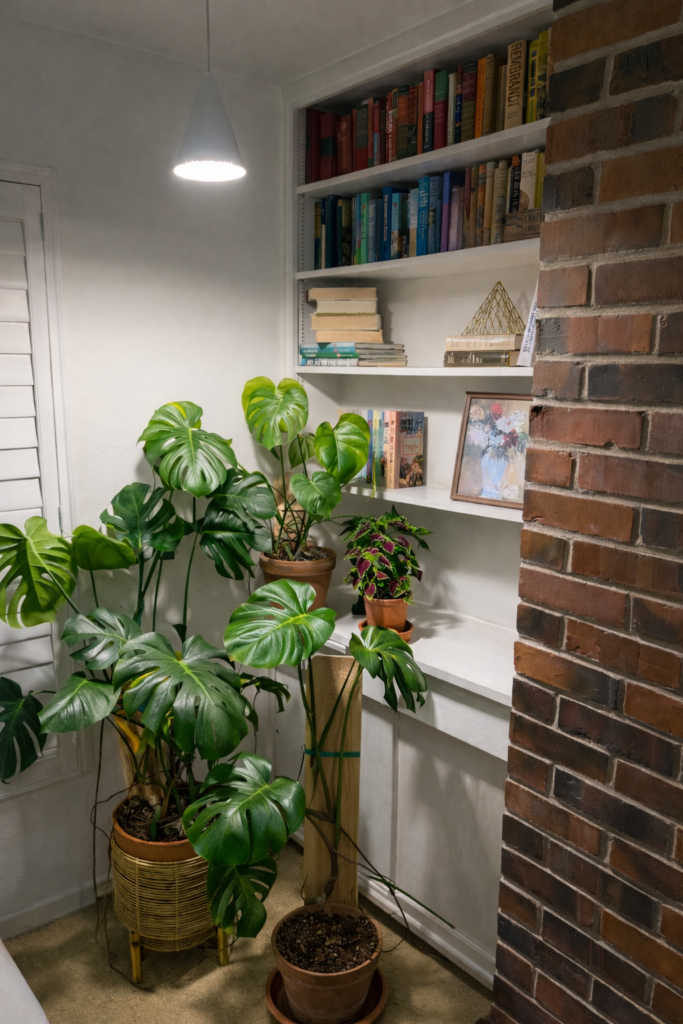
Grow lights are what make year-round plant care realistic.
Instead of constantly rotating plants or worrying about winter light, I use grow lights to even things out. They help plants stay healthy through low-light seasons and let me keep plants in shelves, corners, and rooms that wouldn’t otherwise work.
I use these two different styles depending on the space. One works well for shelves and corners, and the other is better for individual plants that need a little extra light.
Hanging Grow Light
Halo Grow Light
2. Self-Watering Pots
Self-watering pots remove the biggest failure point in plant care: inconsistent watering. They keep roots evenly moist without overwatering, which makes them ideal for busy people, travelers, and anyone who forgets plants exist until they droop.
The ones I use are no longer in stock, but here are some similar if not better options.
Neutral Cream Self Watering Planter
Gray Ceramic Self Watering Planter (8 Inch)
Matte Black Self Watering Planter
3. Moisture Meter
A simple moisture meter can help take the guesswork out of watering, especially for plants that don’t show obvious signs of stress until they’re already overwatered. I find moisture meters most helpful as a double-check tool, not a replacement for learning your plants’ needs.
4. Plant Stands
A simple plant stand or riser helps maximize light, improve airflow, and make crowded plant areas easier to manage. Elevating smaller plants also prevents them from being shaded by larger ones and makes watering and routine care less awkward.
Wooden Multi-Tier Plant Stand for Indoor Plants
5. Humidity Tray or Pebble Tray
Indoor air is often drier than most houseplants prefer, especially during winter heating or summer air conditioning. A humidity tray provides a simple way to add localized moisture around plants without running a full humidifier.
A basic setup uses a shallow tray filled with pebbles and a small amount of water. As the water evaporates, it slightly increases humidity around the plant while keeping the pot elevated above standing water.
Recommended options:
Black Plant Saucers for Humidity Trays
Neutral Decorative Pebbles for Pebble Trays
6. Quality Indoor Potting Mix
A good indoor potting mix supports healthy roots by improving drainage, aeration, and moisture retention, which directly affects plant growth and long-term health.
I use a general indoor potting mix for most houseplants and adjust as needed with drainage or amendments depending on the plant type.
Miracle-Gro Indoor Houseplant Potting Mix
This type of mix is formulated specifically for indoor containers and works well for common houseplants like pothos, philodendrons, monsteras, and snake plants.
7. Liquid Fertilizer for Indoor Plants
This is the liquid fertilizer I use for everyday houseplants when they need a gentle boost, not a long-term commitment. It mixes easily with water and feeds plants right away, which makes it especially useful during active growth or when a plant looks a little tired.
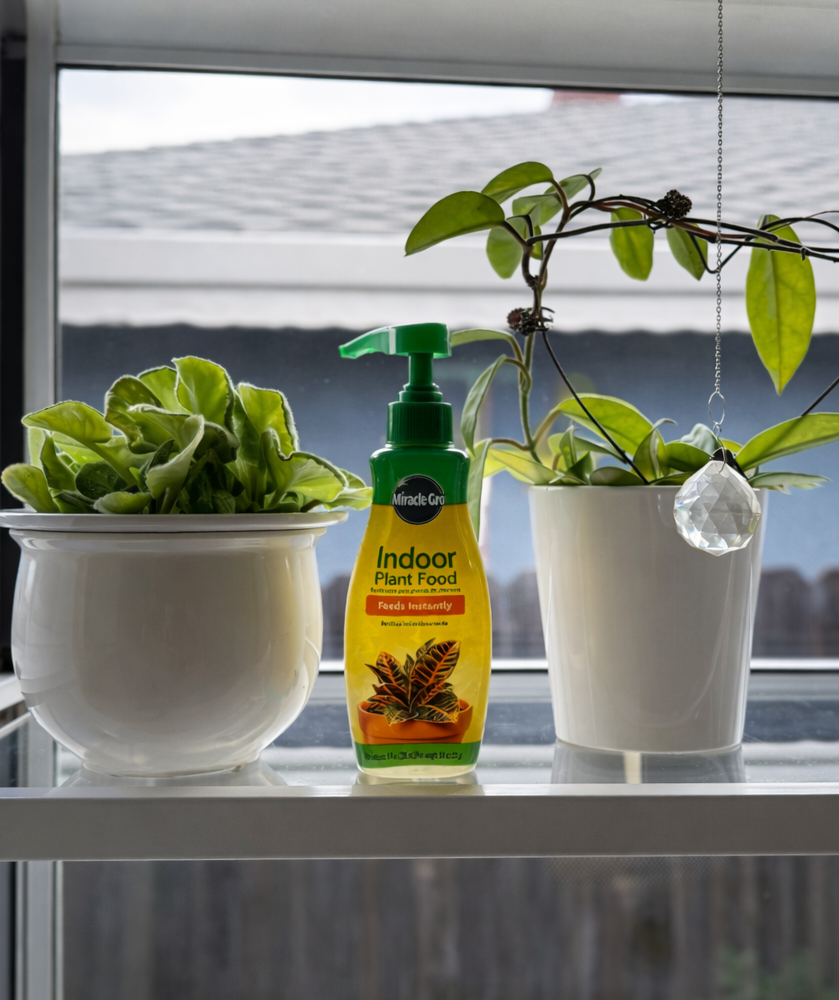
I like liquid fertilizer because it’s flexible. You can adjust how often you use it, skip it when plants are dormant, and avoid overdoing it. It works well for most common houseplants, especially when light is limited and growth is slower.
I use this more as a support tool, not a fix-all. It’s simple, predictable, and easy to work into a normal watering routine.
The liquid fertilizer I use for houseplants
8. Pruning Shears or Plant Snips
Clean, sharp pruning tools prevent plant damage and reduce the spread of disease. Using proper snips makes trimming dead leaves, removing damaged growth, and taking cuttings safer and more precise than using household scissors.
I keep a small pair of plant snips on hand for routine maintenance like removing yellowing leaves or tidying up leggy growth. Sharp blades make cleaner cuts, which helps plants recover more quickly.
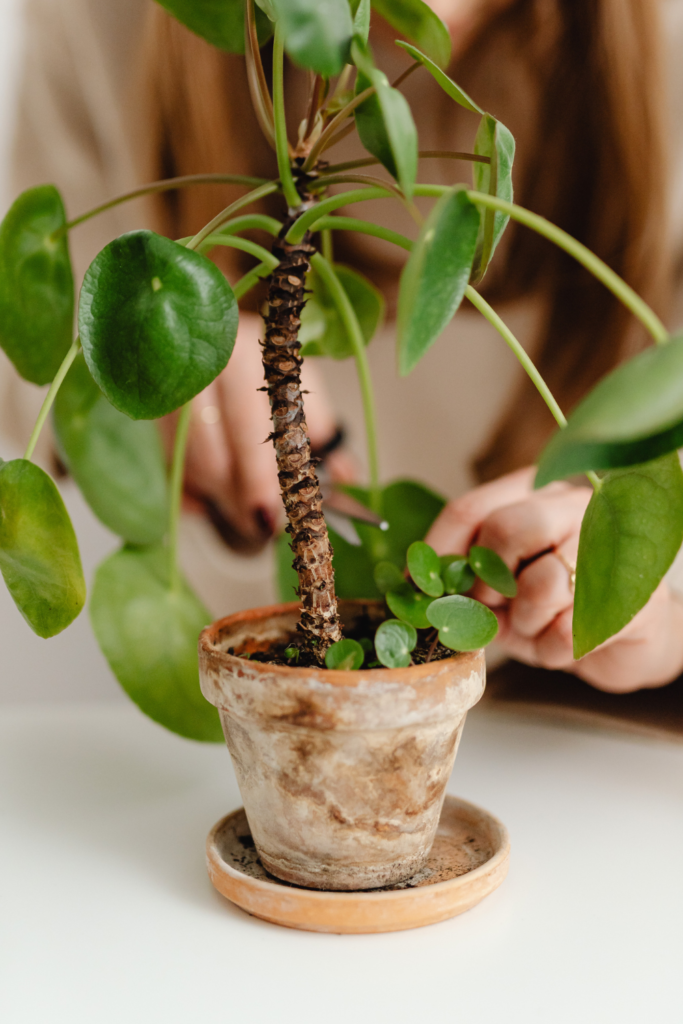
The Everyday Pruning Snips I Use
Fiskars Pruning Shears (Name-Brand Option)
9. Watering Can with a Narrow Spout
A watering can with a narrow spout makes it much easier to water at the soil level without splashing leaves or flooding small pots. This kind of controlled watering helps prevent leaf damage, fungus issues, and messy runoff, especially on crowded shelves where plants are close together.
I use a slim, gooseneck-style watering can in my classroom for my plants because it lets me reach the soil precisely, even behind other pots or decor.
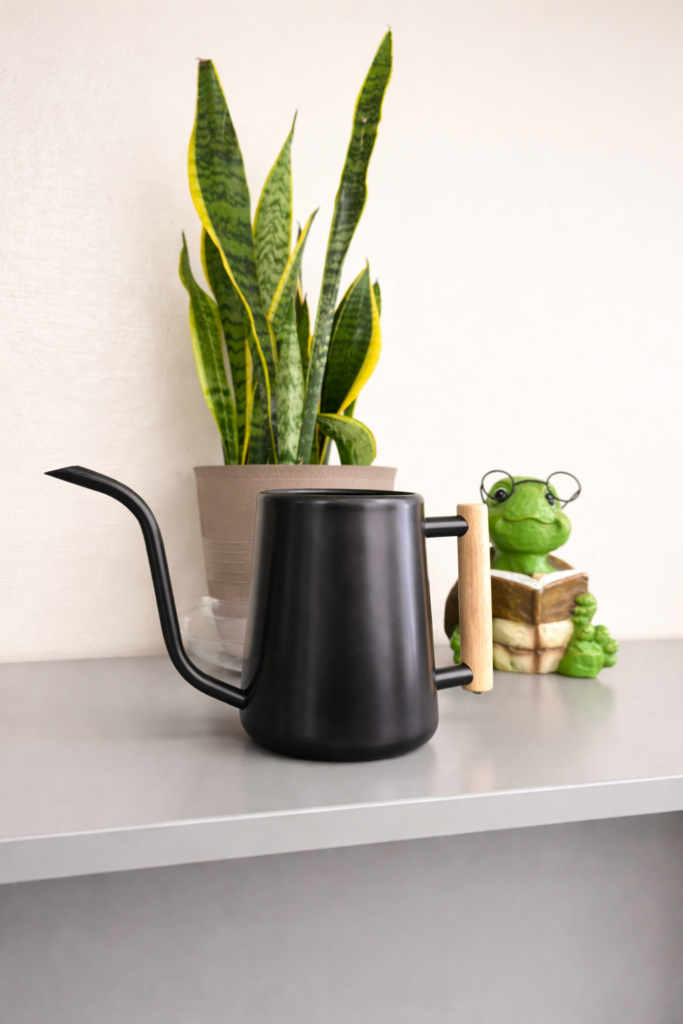
A narrow-spout watering can makes it easier to water houseplants precisely at the soil level..
Black Metal Watering Can with Narrow Spout
10. Plant Labels or Markers
Plant labels help track plant names, watering schedules, and basic care needs, which becomes increasingly useful as collections grow or plants are moved seasonally. They’re especially helpful when caring for similar-looking plants with different light or watering requirements.
Simple, waterproof labels make it easy to update information over time and prevent guesswork, whether plants are grouped on shelves, rotated between rooms, or shared across different spaces.
You don’t need to buy everything on this list to keep houseplants healthy. A few well-chosen tools can quietly handle the most common problems and make everyday care easier. Start with what solves your biggest pain point, and build from there as needed.